A voice from Gaza : Layan
This is the story of Layan, a 16-year-old girl who dreamed of becoming a doctor but now finds herself the breadwinner of her family… here is her story

My name is Layan, and I am 16 years old. I am a girl displaced by the genocide, and my soul feels exhausted in ways words cannot fully describe.
War did not begin for me in recent years. I lived through my first war when I was only a year and a half old in 2012, then another in 2014 when I was three and a half. Since then, wars have continued to shape my life in Gaza. My grandparents themselves were refugees since the Palestinian Nakba of 1948. It feels as though war has become an inheritance passed from one generation to the next, while we have never truly known what a safe life feels like.
Before this war, I had a dream. I was always one of the top students in my school, and I dreamed of becoming a doctor and building a future I could be proud of. I had a school I loved, wonderful teachers, close friends, a home, beautiful memories, and a life filled with hope.
But the war took everything away.
I lost my friends, my teachers, my school, my home, and even my dreams and memories, now buried beneath the rubble. Every day is filled with fear. Every night brings bombardment. Every morning carries news of another victim, another massacre, another neighborhood destroyed. For more than two and a half years, this genocide has continued without stopping.
In the middle of all this, I found myself carrying responsibilities far beyond my age.
I became the one responsible for helping my family survive. We depend on donations to cover our most basic needs and my parents' medical treatment.
My mother suffered three miscarriages within just five months because of the devastating conditions of war. She is still struggling with the physical and emotional consequences. She needs weekly medication, monthly medical appointments, and continuous tests to make sure she is recovering. I do everything I can to provide her treatment.
My father was recently told that he needs surgery for varicose veins. He is also suffering from severe malnutrition and has lost a significant amount of weight.
I also have an eight-year-old little brother who has never been able to return to school since the war began. So I became his teacher. Every day I teach him how to read and write, trying to keep his love of learning alive despite everything around us. I try to plant hope in his heart and in my family’s hearts, even when I struggle to find hope within myself
Although I try to appear strong, the truth is that I am deeply exhausted. I feel as though my childhood was stolen from me, and the weight I carry is far too heavy for a sixteen-year-old girl.
If my words reach you, please don’t let them become just another story you scroll past. Don’t let my story become one of the thousands from Gaza that disappear without anyone caring.
Standing beside me, sharing my story, or supporting my campaign could make the difference between despair and survival for my family.
Thank you to every person who reads my story, and to every heart that still believes compassion can change a life. 🤍
Layan
Question and Answer
Hello Layan, and thank you for agreeing to answer these few questions so we can get to know you better.
This “interview” will be divided into 4 sections: Life in Rafah before, the turning point, the present, and a conclusion.
Life in Gaza
1. How would you describe life in Gaza before you were forced to leave, for people who have never been there?
Life in Gaza was simple but full of warmth. Despite the hardships, we had homes, schools, friends, and dreams. We enjoyed the sea, family gatherings, and the little moments that made life meaningful. It wasn’t an easy life, but it was our home, and we cherished it.
2. How old were you during the evacuations? And how old were your brothers and sisters?
I was 12 years old, but after being displaced more than five times, I feel as though I have aged a thousand years. My younger brother was only 5 years old.
3. What was the school you attended like? Was it a UNRWA school?
At first, I attended a private school that focused on high-achieving and gifted students. Later, I transferred to a UNRWA school.
4. What were your favorite subjects at school?
My favorite subjects were mathematics, science, and English.
5. Do you have any other family members besides those you’ve already told us about? Are you still in contact with them?
My immediate family consists of four people: me, my younger brother, and our parents. My brother and I are school students, while both of my parents have been receiving medical treatment in recent months and need rest and ongoing care. We rely mainly on donations and humanitarian support to provide the basic necessities of life, including food and clean water.
The turning point
1. When did you have to leave? What forced you to do so?
The first time was in January 2024, due to the intense bombardment of homes and ground operations.
2. How did the process of leaving your city happen? What were you able to take with you?
It was not a planned departure; it was a desperate escape to save our lives. We were terrified because of the heavy bombardment, the “fire belts” around us, and the strikes everywhere. I saw many dead bodies lying on the ground, some inside their cars, and human remains scattered around. We were unable to take anything with us.
3. What circumstances led to this departure?
The circumstances were the ongoing genocide and the destruction around us.
4. Did you receive any help?
No. We did not receive any assistance. We were left to face our fate alone.
The present
1. How is the camp organized today? Where exactly are you staying?
At the beginning, the camp was simply a large number of displaced people placing their tents close to one another. As the suffering continued, things gradually became more organized on an individual basis. Later, a committee was chosen from among the displaced people to help resolve disputes and organize the distribution of meals when communal kitchens, water, and other forms of assistance were available.
2. Is there any financial assistance available, or do you rely only on donations to buy necessities?
We have no source of income. We depend on donations whenever they are available. If there are no donations, we are forced to eat whatever we can find and sometimes borrow money to buy medicine and treatment.
3. What are the prices for basic necessities and hygiene products, as well as food?
Weekly Expenses : 💊 Mother’s medication: $115/week 🍞 Food: $85/week 💧 Water: $15/week Total weekly expenses: $215
Monthly Expenses : 🩺 Doctor’s visit & medical tests: $240/month 🌐 Internet: $70/month Total monthly expenses: $310
General Needs : 👕 Clothes & shoes: $350 (I haven’t been able to buy any for a year and a half.)

Here’s an example of market prices for a single day, they change every day!
4. Is there mutual aid in the camp, and how is it organized?
People here have kindness in their hearts and help each other as much as they can, but everyone is poor and in need.
5. How are your daily lives organized in the camp?
There is no life in the true sense of the word. We begin each day struggling to secure clean drinking water through water trucks. I also take care of my younger brother, help educate him, and continue my own studies online whenever the internet is available.
Conclusion
If you could speak to everyone, what would you say to them?
If I have one message to share with you, it is this: do not believe those who tell you that a ceasefire in Gaza means the suffering has ended. They are hiding the truth from you.
Since the announcement of the ceasefire, hundreds of people have been killed here, and death continues to surround us. Large areas of Gaza have been taken behind what is called the “yellow line,” dozens of aid organizations have stopped operating, and thousands of injured people are still waiting for a chance to leave for medical treatment.
Gaza is now standing on the edge of collapse. This is not just a matter of numbers in the news; these are human lives being slowly drained away every single day.
The world is facing a true test of its conscience: can humanity accept this slow death of hundreds of thousands of people while watching in silence?
A voice from Gaza : Islam
Thanks to Islam for being willing to share his story with us and for placing his trust in me.
You’ll find the donation page below :
I am Islam Radwan, a widow from gaza. My husband died in the war, and I have 3 children left. In the 34 years of my life, I have witnessed 5 brutal wars and many escalations. Since I was a child, we have been suffering from a financial crisis and poverty, and many nights we have slept without food.
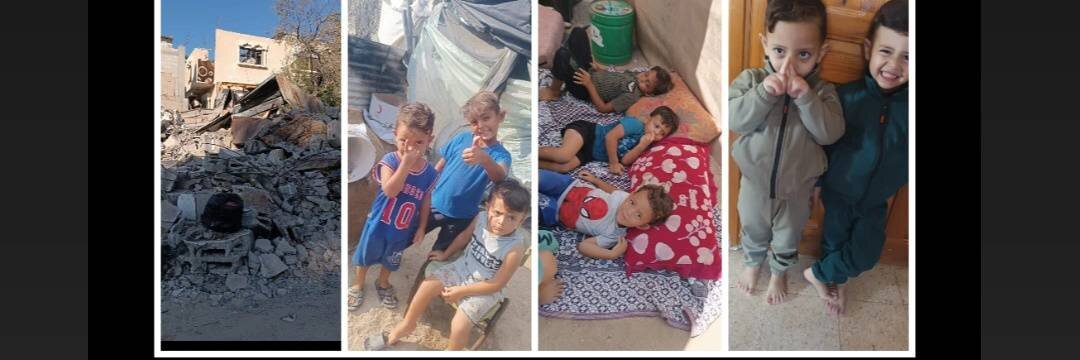

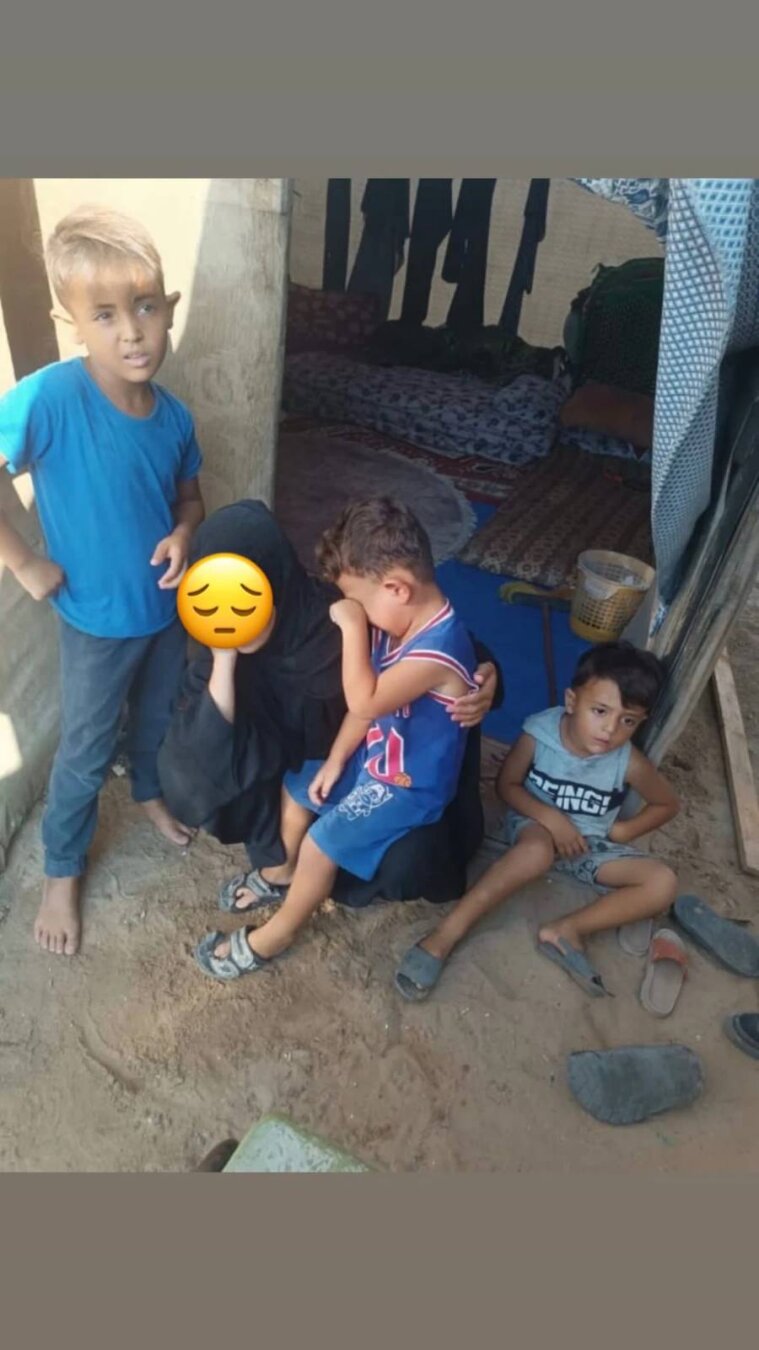


In the past period, we have seen a slight improvement in our living conditions, but since the beginning of the war, the destruction has been raging in Gaza. Our source of livelihood, my work…
With the war, all our dreams and ambitions are over, and we are now staying in tents that are not enough to repel any wind or hail. In addition to our displacement, we are facing a dramatic rise in the cost of living, which makes it difficult to leave Gaza, due to the enormous rise in the cost…
Also, don’t forget to help us even with something simple in this difficult situation, and the high prices of all commodities helps us to meet our daily needs and expenses.
I got married at the age of twenty and I have 3 children without a father. Our dreams of building our house and raising our children well ended because of the brutality and barbarism of the war. We lost everything. Now I don’t have the money to buy the most basic elements of life for them.
Help me for my children and to rebuild our home I ask you to help me build our home and save my life and the lives of my children, my family and my loved ones from this
Question and Answer
Hello Islam, and thank you for agreeing to answer these few questions so we can get to know you better.
This “interview” will be divided into 4 sections: Life in Rafah before, the turning point, the present, and a conclusion.
Life in Gaza
1/ How would you describe life in Gaza before you were forced to leave, for people who have never been there?
Gaza is not merely a geographical location; it is a state of being. It is a city perched by the sea—a sea that served as the sole outlet and a sanctuary offering respite from the harshness of daily life. Life there was defined by deep-rooted simplicity and profound social cohesion; within its alleyways, neighbors knew one another, and relationships were forged over many years, creating a spontaneous social support network that made the individual an integral part of a greater whole. It is difficult to describe Gaza without noting its contradictions: in a single day, one might encounter the morning calm of the waves, the bustle of markets teeming with vendors and shoppers, and the laughter of schoolchildren—all while a sense of anticipation, mingled with hope for a better future, always loomed on the horizon. Life there never came to a halt; it defied it. Every moment was lived with a keen awareness of its value, and clinging to the small details—a morning cup of coffee, family gatherings, or the sight of the sunset—was what gave life meaning amidst such hardship. In short, Gaza was and remains the embodiment of “life in the direst of circumstances”—a city that does not merely survive but insists on sowing beauty and hope in every corner, holding fast to a strong, unwavering cultural and social identity.
2/ How old were your children when you had to leave? Did they realize what was happening around them?
Islam was just turning six, Yahya was four, and Muhammad was three. Yes, they were fully aware of their surroundings and constantly surrounded by fear; my warm embrace was the only refuge where I could shield and soothe them.
3/ What is your educational and professional background?
I completed my secondary education, graduating with an average of 72%. I also studied Basic Education at university for two years but was unable to complete my studies due to the war.
4/ What was the school your children attended like? UNRWA ?
No one attended school; the war came, and they did not study. It was only a year ago that my eldest son, Islam, enrolled in a school—an UNRWA-affiliated one called Ma’aref Mazoun—in Al-Mawasi, Al-Qarara.
5/ What were their favorite subjects in school ?
I am laying a solid foundation for them because they are young; Yahya and Muhammad are in kindergarten. As for Islam, mathematics is his favorite subject.
6/ Do you still have any family, besides your children ? Are you still in touch with them ?
I have only my children, whom I care for on my own. I dedicate all my time and effort to them, they have no other support. I rely on donations to provide for their basic needs.
The turning point
1/ When did you realize you had to leave? What was the trigger?
Leaving was not a choice but a necessity imposed by the escalating situation, which rendered remaining in Rafah intolerably dangerous. The turning point came as the margin between safety and death shrank with every passing hour, and you realized that protecting your three children and ensuring their basic safety required making this difficult decision; the family’s well-being was the sole, driving force behind this move.
2/ How did your departure from Rafah unfold? What were you able to take with you?
Leaving Rafah was a journey fraught with danger and confusion. Amidst the chaos and the scarcity of transportation, you were forced to rely solely on what you could carry by hand. In those moments, the focus was on absolute essentials: vital identification documents, a little food and water, and basic clothing for the children. You left behind not merely material possessions, but memories and the details of an entire life—clinging to the enduring hope of return.
3/ Under what conditions did this departure take place?
The departure took place under extremely difficult conditions, marked by unsafe roads, severe congestion, and a scarcity of fuel and transportation. The journey unfolded amidst ongoing shelling and security threats, necessitating constant vigilance and extreme caution throughout the trip, alongside indescribable psychological stress and a continuous effort to keep the children calm amidst the terror.
4/ Did you receive any help?
We did not receive any financial assistance. The strength of family and social solidarity often came to the fore; I relied on the support of family and relatives—such as my siblings—to coordinate movements or provide urgent information regarding the safest routes. Help often came from others undergoing the same experience, with everyone sharing information and basic logistical support to navigate the crisis. Ultimately, family cohesion served as a bulwark that mitigated the severity of the ordeal.
The present
1/ How is the camp organized today? What exactly are you living in?
I do not live in an organized camp; instead, I rented a plot of land and set up my tent there. This is the third location I have occupied in a row; the landowners are greedy—they evict people and demand rent.*
2/ Is there any financial assistance available, or do you rely solely on donations to buy things?
We rely entirely on donations. Every three months, the World Food Programme provides us with a sack of flour, a carton of canned goods, and a kilogram and a half of biscuits.
3/ What are the prices for basic necessities and hygiene products, as well as food?
Prices for basic goods are extremely high, including cleaning supplies, which we can barely afford to buy. Food prices have dropped somewhat compared to before, but my children crave fruit; I cannot buy it, nor can I even look at it, and I am too embarrassed to ask the price because I simply do not have enough money.
4/ What can you buy where you are?
I am currently in an area called Mawasi Al-Qarara. There is a supermarket offering a wide range of goods, but I do not buy many of them because they are too expensive; there are also many roadside stalls. I can only afford to buy vegetables, some legumes, and basic necessities.
5/ Do your children have internet access for their studies?
My children are young and don’t even have phones. The oldest is 8 and the youngest is 5. As I mentioned before, my eldest son attends a UNRWA school. They don’t use the internet; I am the only one who uses it.
6/ Is there mutual aid in the camp, and how is it organized?
Yes, mutual solidarity is the last line of defense. It is organized through simple, self-initiated efforts: Sharing the meager food available among neighbors. Cooperating to fetch water from distant distribution points. Neighboring families caring for children who have lost their loved ones. It is a form of solidarity (both emotional and material) to the extent that harsh conditions allow.
7/ How are your daily lives organized in the camp?
Morning: Begins with searching for water—whether for drinking or washing—and standing in long lines to obtain bread or aid. Daytime: Most of the time is spent trying to secure food or repair the tent (often torn by the wind or sun). Night: Trying to stay safe amidst harsh weather conditions and pitch darkness.
Every day is a repetition of these arduous tasks, where life is reduced to “securing a livelihood” and “seeking safety.”
Conclusion
If you could speak to everyone, what would you say to them?
If I could speak to everyone at once, I would remind them of a truth often lost amidst the clamor of individual conflicts and global crises: the power of our shared humanity. In a world that frequently focuses on what divides us—geography, circumstances, and ideologies—I would say this: The Value of Presence “You are not merely observers of history; you are the authors of the next chapter. Even in the harshest of circumstances, the simplest acts of kindness—sharing a meal, a moment of listening, or simply choosing to help a neighbor—are the building blocks of a better future. Never underestimate the weight of your compassion.”
Empathy is not a weakness; rather, it is one of the most sophisticated tools for survival. When you choose to view the world through the eyes of someone whose life is vastly different from your own, you break the cycle of misunderstanding. We are all bound by the same fundamental needs: the need for safety, the need for dignity, and the need for others to see and understand our suffering.
A voice from Gaza : Nour
Shuttered Dreams and Frozen Hope: The Fight to Keep My Six Children Alive in Gaza
Hello everyone,
Here is Nour story. A big thanks again to her for her trust!




https://gaza-verified.org/people/@NOUR_GAZA_s2@mastodon.social/
https://chuffed.org/project/178629-noorhans-gaza-family-rebuild-hope-restore-dignity
https://chuffed.org/project/019db787-6a8d-7312-8d45-b6b60814e386
Her story
Before the displacement and the war, I worked in digital marketing, and it was our family’s only source of income. I never had the opportunity to work in my university field of study. I earned a bachelor’s degree in Arabic Language, but unfortunately, I was never able to find employment in that field
My name is Nourhan. I was born in 1989, a woman who once had simple dreams, but today, I am a mother fighting an invisible, agonizing war just to keep my six beautiful children alive.
Before this nightmare began, our life was simple but filled with warmth and stability. Our home was a sanctuary where my children felt safe. They attended UNRWA schools—bright, talented souls with big dreams for a peaceful future. My husband holds a university degree in Early Childhood Education, and despite the scarce opportunities in Gaza, he worked as a teacher whenever he could. I, too, graduated from Al-Aqsa University with a degree in Education. But like thousands of youth here, the suffocating siege and unemployment locked those doors. Refusing to surrender, I taught myself digital marketing to support my family and to afford my own medical treatments.
My health broke years ago after a terrifying accident; one of my children fell down the stairs and lost consciousness. The sheer trauma of that moment altered my body forever. I was diagnosed with chronic hypothyroidism and severe adrenal insufficiency (high cortisol), requiring lifelong medication and regular, expensive medical testing just to survive. Yet, despite the illness, we were happy. We had each other.
Then, the sky fell.
The war came and swallowed everything we owned. Our home was reduced to rubble. Our sources of income vanished in a flash. In an instant, we became homeless, stripped of our dignity, shoved into torn, fragile tents.
Today, the crushing weight of our entire world rests solely on my shoulders. My husband’s eyesight, already weak, has deteriorated drastically. He now suffers from severe spinal disc disease and debilitating back inflammation, leaving him completely unable to work or lift anything.
Since the onset of this horrorshow, we have been forcibly displaced more than ten times. Ten times of running through streets paved with fire, clutching my children’s hands, fleeing death only to arrive at another unknown wasteland. We have stared death in the face countless times. Shrapnel and bullets have rained inches from our bodies. The relentless, buzzing roar of drones never leaves our skies. Tanks, shelling, and earth-shattering explosions have become our daily breath. We wake up every single morning wondering if this day will be our last.
Yet, amid this living hell, I refuse to let the darkness steal my children’s future completely. I bleed myself dry to send five of them to a makeshift educational center so they don’t forget how to read and write. It costs $200 every month—an impossible fortune for us. Some months, we can only pay if a kind soul donates to our fundraiser; other months, the fees pile up, and our debts grow like a mountain, threatening to lock them out of learning.
But nothing prepared us for the dark horror of the famine.
When my youngest daughter was just a baby, the starvation was so severe that my breast milk completely dried up. I watched her cry from hunger, and my hands were empty. My six-year-old son developed severe, acute malnutrition; today, he lives with chronic, severe anemia, desperately needing specialized medical care and real nutrition that I cannot provide. My eldest child, now thirteen, has had his growth permanently stunted. Because of prolonged starvation, his frail body looks like that of a seven-year-old child. My ten-year-old son suffers from recurring, painful skin conditions and severe allergic swellings that erupt without warning due to the toxic environment.
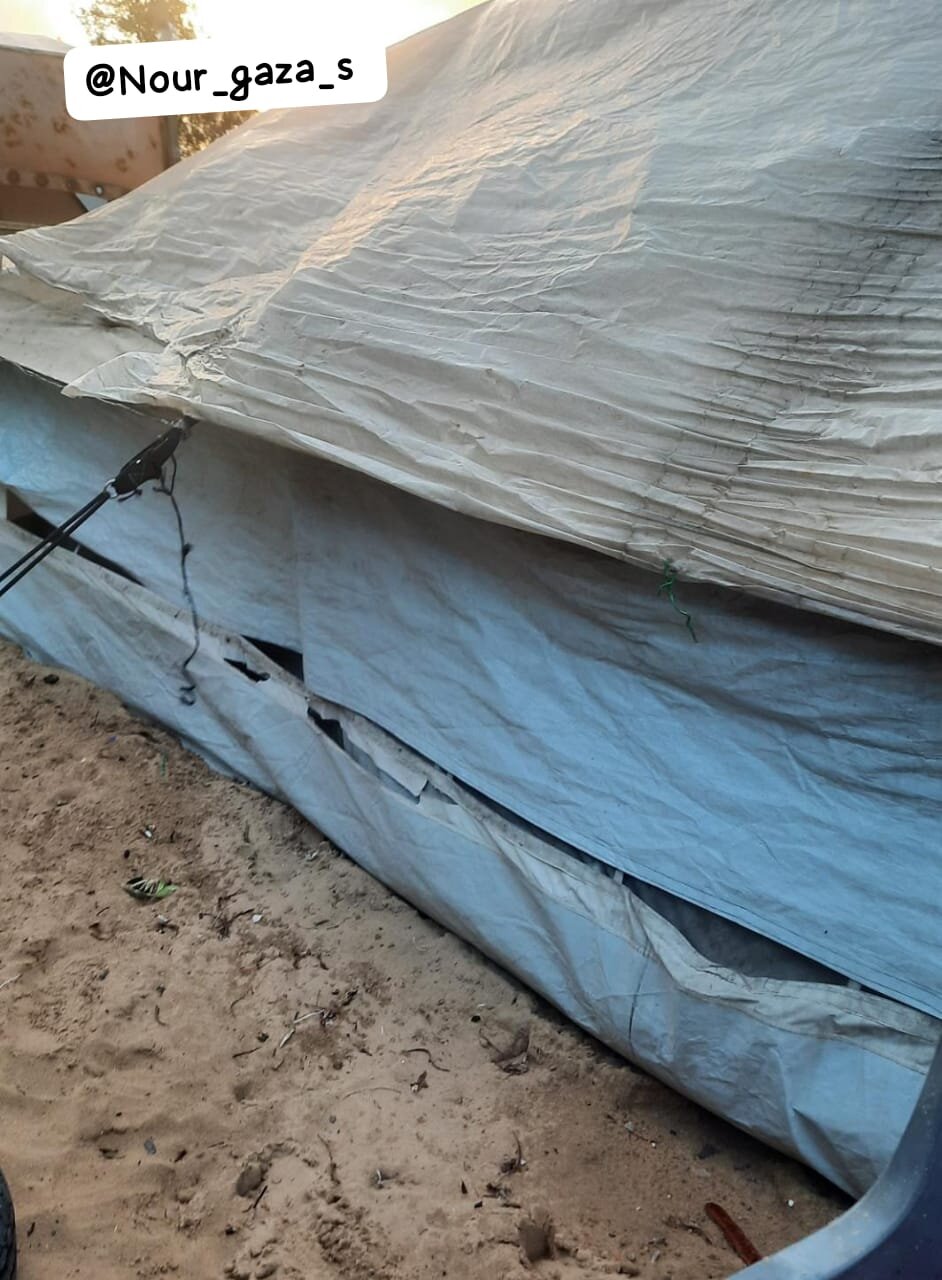
The tent we call “home” is a nightmare. It is torn, freezing in the winter, scorching in the summer, and crawling with rats, fleas, and insects. Clean drinking water is a luxury we can only pray for.
Right now, our survival depends entirely on this fundraising campaign. Food prices have skyrocketed to insane, impossible levels. The very little food we can find is miserable. The meat and eggs available are of the lowest, worst possible quality (“Tareef” brand)—spoiled, foul-tasting, and barely fit for human consumption. The fruits and vegetables are mostly rotten, unripe, and highly unhealthy. Yet, we are forced to buy them at astronomical prices just to stay alive.
Instead of sitting in bright classrooms, my children spend their fragile childhoods carrying heavy water containers across long, dangerous distances. They stand in exhausting lines for hours for a piece of bread or wait at charity kitchens. During the height of the famine, they literally risked their lives just for a loaf of bread, returning to the tent bruised, traumatized, and trembling with fear. No child in this world should ever have to trade their childhood for a piece of dry bread.
We don’t dream of luxuries. We dream of sleeping for one single night without the terror of explosions. We dream of a cup of clean water. We dream of a safe, sturdy shelter. We dream of restoring our stolen dignity.
As for me, my body is failing. I struggle daily with chronic hypothyroidism and adrenal insufficiency, confirmed by medical reports. I must take 100 mcg of Thyroxine every single day, alongside monthly medical tests and specialized care that we cannot afford.
Some of the hardest days we have ever endured were the days of starvation. It was an unimaginably brutal time. We didn’t have a single crumb of bread. Flour became a rare luxury; a single 25-kilogram bag skyrocketed to an astronomical $1,000—an amount that would only sustain my family for a single week. Hunger consumed us. Desperate for anything to quiet our empty stomachs, we found nothing to eat but tree leaves.
When the so-called “humanitarian aid corridors”—which were nothing but traps of humiliation and death—finally opened, crowds of desperate people would gather, waiting for hours under the scorching sun. Every single day, people were killed or wounded. Driven by sheer starvation, my young children had to go there. Sometimes they would return with a single kilogram of flour; other times, they came back empty-handed, their fragile bodies bruised, bleeding, and torn. The occupation forces opened fire directly at the crowds. My own brother was martyred there, killed while waiting in line just to bring some flour or lentils to his hungry children.
Prices were insane. We went to sleep for consecutive nights without a single bite of food. We were starving. My children were exhausted, crying constantly from the pain of hunger. Our faces grew pale and gaunt, and our bodies wasted away. I lost 18 kilograms. Because my chronic medication was completely unavailable, I suffered from frequent fainting spells and severe drops in blood pressure. With our pale faces and protruding bones, we looked like walking ghosts. We were exhausted, and to this day, we still suffer from the deep physical and psychological scars of this famine.
The Collapse of Daily Life and Healthcare
Before the war, transportation was excellent and readily available. Now, we are reduced to riding donkey carts, heavily overcrowded with people. It is so unsafe that passengers frequently fall off and get injured. Accessing medical care has become nearly impossible. Hospitals have been bombed, and a massive number of doctors and medical staff have been martyred. The remaining medical personnel are stretched dangerously thin, utterly unable to handle the overwhelming volume of patients. There is a catastrophic shortage of medicine because the occupation blocks medical supplies from entering.
When we do seek treatment, it is usually in makeshift medical points set up in tents. Thousands of patients wait for hours, sitting on the bare ground under the burning sun. A sick person goes in search of healing, only to return in worse pain, thoroughly exhausted to the point of collapse by the journey, the waiting, and the heat. In the end, you are usually told that your medicine is out of stock, or that a substitute exists in an outside pharmacy at a price no one can afford. We are withering away, dying a slow death.
There is no healthcare, no education, no food, no clean water, no usable roads, no proper transportation, and absolutely no source of income to sustain a dignified life.
I am not asking for the world. I am asking for a lifeline to keep my children alive, healthy, and educated.
If your heart can feel our pain, please consider supporting my campaign or becoming a long-term sponsor for my family. Your compassion is the only bridge between my children and survival. It means medicine instead of agonizing pain, education instead of dark despair, and a flicker of hope instead of paralyzing fear.
Thank you for looking into our eyes and listening to our story. Please, do not let the world forget us.
Question and Answer
Hello Nour, and thank you for agreeing to answer these few questions so we can get to know you better.
This “interview” will be divided into 4 sections: Life in Rafah before, the turning point, the present, and a conclusion.
My name is Nour, a mother of six from Gaza. Today, my family is living through a nightmare of displacement, hunger, illness, and fear. I am writing with a heart full of pain, asking you not to turn away from us. We have lost safety, stability, and the basic things every family needs to survive.
Life in Gaza
How would you describe life in Gaza before you were forced to leave, for people who have never been there?
Before the war, life in Gaza was difficult, but we still had some sense of normal life. My husband worked first as a volunteer, and later as a private tutor through an informal educational institution. He was never able to secure a stable job with UNRWA, and work opportunities in Gaza were already extremely limited because unemployment was so high. Still, despite all the hardship, we had some safety, and prices were manageable. We were surviving. Then the war destroyed everything.
How old were your children when you had to leave? Did they realize what was happening around them?
When the bombing began, my youngest baby was only two months old. Her brothers and sisters were 4, 7, 10, 12, and 14 years old. My older children were old enough to understand the horror around them. They saw fear, destruction, and panic with their own eyes.
The turning point
The turning point :
When did you realize you had to leave? What was the trigger?
When we were ordered to evacuate, we fled to Rafah while danger closed in around us.No one supported us.
Under what conditions did this departure take place?
We spent long nights in the streets with almost nothing, carrying only a few belongings.
Did you receive any help?
We were alone, hungry, terrified, and displaced.
The present
The fear, exhaustion, and lack of food were so severe that my breast milk dried up while my baby was only two months old. I cannot describe the pain of watching my infant cry from hunger while I searched desperately for milk I could no longer provide. Formula became impossibly expensive, and we were forced to borrow money just to keep her alive. Since then, debt has continued to pile up on our shoulders.
Eventually, we found temporary shelter with a relative who had rented a piece of land and asked us to share the rent. We lived in a tiny makeshift space made of torn fabric, without proper water and without a bathroom. The cold was unbearable. Many nights we had to ask neighbors for blankets, and many nights we slept hungry and freezing.
Now we are living in another unsafe place, and even this fragile shelter is not secure. We are repeatedly forced to evacuate because of bombing and fear, and the owner of the land wants us to leave because he plans to sell it. The tent we live in is badly torn, and we urgently need a new one. We are suffering from insects and rodents, and there is no real safety or comfort for my children.
My children are also losing their education. Sometimes they try to get internet from the street, but only with great difficulty. Repeated internet cuts have made online learning almost impossible. Education in Gaza has become expensive and limited. I have five children of school age, and we need at least $200 every month just to cover one subject for each of them. The educational centers available now provide very little real learning — only a few hours a week, often far from where we are staying.
On top of all of this, our medical needs are overwhelming. I suffer from chronic illness and need ongoing treatment and monthly tests. My husband needs glasses, and so does my young son, who has an eye condition affecting his vision. One of my children is suffering from malnutrition and severe anemia and urgently needs proper food, treatment, and care.
I am carrying more than I can bear. I am trying to protect my children from hunger, illness, fear, and the loss of their future, but I cannot do this alone.
I am asking you from the depths of a mother’s heart: please stand with my family. Please help us with food, medicine, shelter, and education. Please help me give my children a chance to survive this nightmare with dignity.
Conclusion
If you could speak to everyone, what would you say to them?
If you cannot donate, please share my story with others. A share, a kind word, or a connection to someone who can help may save my family. Please do not leave us alone.
You are our hope.
A voice from Gaza : Rania
Hi everyone, Here is Rania’s story
Introduction

Hello Rania, and thank you for agreeing to answer these few questions so we can get to know you better.
I just hope to find support and someone to help me by donating, spreading the word about my campaign, or sponsoring my family. Thank you.
Here is her testimony, just as she gave it to me:
My husband went to the famine area during a very, very, very difficult time. He went to collect aid for his children. Many people were being killed while trying to get aid. Unfortunately, my husband fell while trying to get it. Under the aid truck, two of my friends were killed instantly. My husband, unfortunately, was run over by the truck; he can no longer walk.I struggle to make ends meet. I rely on a link to earn money so that I can live and provide food for myself, my children, and my husband.
During the famine, my daughter Kinda, due to malnutrition, would fall to the ground and break her arm. There was no food for the children.
My husband went to the famine area during a very, very, very difficult time. He went to collect aid for his children. Many people were being killed while trying to get aid. Unfortunately, my husband fell while trying to get it.
Living in tents is very difficult in the summer due to the heat and insects; we cannot sleep. Life is extremely difficult.
While we were in Rafah, my brother’s house was bombed, and I was inside. My nephew was martyred two days after being injured. Those were very, very, very difficult times.
Death in Gaza has become easier than drinking water… Imagine walking down a quiet street when suddenly a shell lands next to you, targeting someone you didn’t know about, and suddenly you’re gone.
The most heartbreaking thing that made me cry was while I was talking to you. I remember my mother went to Egypt for treatment during the war, and I was eagerly awaiting her return. She was also waiting to return to Gaza, but unfortunately, she passed away in Egypt and was buried there. I never saw her again. Whenever I remember my mother, I cry a lot, I swear to God. My heart is breaking from the pain of separation. My heart breaks for my mother’s loss. War is on one side of the scale, and losing my mother without saying goodbye or seeing her again is on the other. I didn’t cry over a house or anything else that happened, only over my mother. I started wishing I could join her. Praise be to God for everything in the end.
Life in Gaza
How old were your children when you had to leave? Did they realize what was happening around them?
My children are: Kinda, seven years old; Ady, 10 years old; Jana, 13 years old; and Aya, 18 years old. It’s true, my children were aware of what happened in Gaza and knew everything. The war was very, very difficult. It differs from all previous wars because it destroys the house and everyone inside it.
He might destroy an entire square just to assassinate one person.
What is your educational and professional background?
As for my education, I finished my university studies, majoring in science, but unfortunately I didn’t get a job due to nepotism and favoritism in hiring.
What was the school your children attended like? UNRWA ?
Education was excellent before the war, especially in UNRWA schools; there was a lot of attention given to it… unfortunately, the schools were destroyed, and the remaining schools are now housing displaced people.
What were their favorite subjects in school ?
My children love studying English; it’s one of their favorite subjects.
Do you still have any family, besides your children and your husband ? Are you still in touch with them ?
I have brothers, each living in a place where the war separated us. I am now only with my children and my injured husband.
The turning point
When did you realize you had to leave? What was the trigger?
Israel ordered us to leave the area we were in, the city of Rafah. They gave us a one-day deadline, and then the bombing began everywhere. I tried to stay through the bombing, but I left everything and went out of my house. I didn’t take anything because of the heavy shelling.
How did your departure from Rafah unfold?
Walk on foot, there are no vehicles. Everyone is afraid to enter Rafah city.
Under what conditions did this departure take place?
The second day, the first day, it might have been Gaza is small and easily controlled.
Did you receive any help?
Unfortunately, the World Food Programme’s food aid consists of canned goods, beans, lentils, and rice. My children are tired of eating lentils, beans, and rice. This is the aid we receive from the World Food Programme.
The concrete present
How is the camp organized today? What exactly are you living in?
I live in a tent in the Al-Mawasi area of Khan Younis. This is a town before Rafah from the north, about 7 kilometers away from Rafah.
Is there any financial assistance available, or do you rely solely on donations to buy things?
We rely on donations. The money we receive from donations is subject to a high commission, up to 17% to 20%, when we take money from an office. And after much longer than that This means that the amount we receive doesn’t reach the total amount because a large portion is deducted for commission.
What are the prices for basic necessities and hygiene products, as well as food?
A kilo of meat can cost up to $40 Because prices rise significantly during the holiday. And the prices of cleaning supplies are also high. Once a month, I buy half a kilo for my children. Chicken is the same; buy chicken wings, they’re the cheapest.
What can you buy where you are?
For cleaning supplies, buy only soap and only dishwashing liquid. We wash with soap, not shampoo. It’s difficult to buy clothes all at once in a year; their prices are high and would cost me a lot for my four children. I can’t afford to buy them. Wash clothes with soap most of the time. If you have the money, buy Ariel laundry detergent.
Do your children have internet access for their studies?
The internet is available, and my children study online.
Is there mutual aid in the camp, and how is it organized?
There is no reciprocal assistance; the camp has a representative who, in case of receiving aid, distributes it within the camp. Like soup kitchen food
How are your daily lives organized in the camp?
Most of the time, I relied on food from the soup kitchen distributed by the international kitchen. My children got tired of the soup kitchen food. It consists of lentils, rice, and beans. Because we are living in harsh conditions after leaving our home, we live in tents that offer no protection from the sun’s heat or the winter’s cold. Living in tents is very difficult in the summer due to the heat and insects; we cannot sleep. Life is extremely difficult.
Conclusion
If you could speak to everyone, what would you say to them?
First, thank you for giving me this opportunity to talk about the suffering of the people of Gaza and my own suffering in particular. I want to tell everyone that the war in Gaza is not over. The suffering is not over. The fear and killing are not over. Every day is worse than the last. We have lost everything: relatives, loved ones, friends, homes. We are living a difficult life in the camps. I hope everyone… May they not abandon their humanity, and may their help enable us to persevere and face the harsh conditions we are living through. All my love and respect to you all.
A voice from Gaza : Hadeel
Hello everyone,
Here is Hadeel story. A big thanks to her for her trust!

I’m Hadeel from Gaza I want to talk to you to share my story… Voices from Gaza
I am a mother of two children, Jouri and Hamza… I write these words with an unbearable pain in my heart. I never imagined life would bring us to this point of helplessness and need, but today we live a reality harsher than words can describe.
My husband has an amputated leg… he lost his ability to work and move, and now he himself needs help.

Since that day, everything in our lives has changed. We have no provider, no source of income, only daily fear of tomorrow and hunger that haunts my children every moment. We live in a tent that offers no protection from the heat or the cold… the wind plays with it, dust fills our lungs, and insects attack us at night.
My children know nothing of safety or peaceful sleep. Jouri is sick; her condition worsens day by day due to the lack of medicine and food, and I stand helpless before her, able only to weep and pray.
As for Hamza, despite his young age, he goes out every day to stand in long lines under the sun, waiting his turn to receive a little food from the charity.
How many times has he come home crying… because he got nothing, or returned with a meager amount that wasn’t enough for him, not even enough for a child who needs food to grow?
I see in his eyes a weariness beyond his years, and I feel his childhood being stolen from him day by day.
Life here isn’t life… it’s a constant struggle for survival. We try to provide the most basic necessities: clean food, potable water, simple medicine… but these have become distant dreams. I’m not asking for the impossible…
I just want to see my children well, to eat without fear, to sleep without hunger, to receive their treatment before their condition worsens.
I want to reclaim a small part of the dignity that has been taken from us. My story isn’t unique, but my pain is all I have left now… Please, don’t leave us alone. Any help, any support, any participation… could save my children’s lives.
Question and Answer
Hello Hadeel, and thank you for agreeing to answer these few questions so we can get to know you better.
This “interview” will be divided into 4 sections: Life in Rafah before, the turning point, the present, and a conclusion.
Life in Gaza
How would you describe life in Gaza before you were forced to leave, for people who have never been there? Firstly, Gaza was very beautiful… beautiful because of its people… generous to its guests.
How old were your children when you had to leave? Did they realize what was happening around them? I have two children. Jouri and Hamza Jouri was 3 years old. She was a very smart child who understood everything that happened. She remembered our house and her toys that we left without. As for Hamza, he was a year and a half old, an innocent child who understood nothing.
What is your educational and professional background? I graduated from the Islamic University with a bachelor’s degree in Islamic Education and I used to work as a childcare provider in a private association.
What was the school your children attended like? UNRWA ? My children are young and haven’t started school yet, but I used to take Jouri to my work with the children so she could have fun.
What were their favorite subjects in school ? They didn’t attend school… School enrollment begins at age 6. But Jouri loves coloring and drawing.
Do you still have any family, besides your children and your husband ? Are you still in touch with them ? I lost my mother in the war… My mother has cancer and hasn’t received any treatment because of the siege. But my husband’s family is next door
The turning point
When did you realize you had to leave? What was the trigger? I realized I had to leave when the danger reached our area; it became a danger zone. The shelling is everywhere; hand grenades are being thrown at anyone who leaves their house. The area is under siege, with no goods or food allowed in.
How did your departure from Rafah unfold? What were you able to take with you? I took nothing with me, and danger was right above our heads, so we fled without anything. We walked long distances because there was no transportation available.
Under what conditions did this departure take place? The place became extremely dangerous, so we left.
Did you receive any help? We receive one monthly food voucher from the World Food Programme.
The present
How is the camp organized today? What exactly are you living in? I am currently staying in Deir al-Balah in a tent belonging to a camp, but no aid is reaching me. The tent is very poor quality and has been torn by strong winds and the sun.
HIs there any financial assistance available, or do you rely solely on donations to buy things? There is no financial assistance… it relies on small donations. Sometimes we rely on food from soup kitchens; sometimes we get it, sometimes we don’t.
What are the prices for basic necessities and hygiene products, as well as food? Prices are very high, especially for vegetables and meat. Prices doubled
What can you buy where you are? Everything is available and accessible, but the prices are too high for me to afford.
How do you connect to the Internet? We don’t have electricity; we rely on batteries and internet from public lines in the street.
Is there mutual aid in the camp, and how is it organized? Yes, everyone is cooperative, likes each other, and helps with cleanliness… everyone cleans their own area.
How are your daily lives organized in the camp? Our way of life is the same in the camp… In the morning, we form half a queue to get water… and then another queue to get bread… and our food is deliberately prepared by the soup kitchens. There is no lighting; we enter our tents before darkness falls for fear of animals… dogs. There are many rodents
Conclusion
If you could speak to everyone, what would you say to them? I am the sole provider for my children. No one helps me. My husband’s leg was amputated, and he can’t do anything; he’s completely helpless. My children, despite their young age, are the ones who stand in line for water and food under the scorching sun. I need weekly assistance so that I and my children can live. The lighting and tents here are very bad.
My children’s lives have been turned upside down, and they have no life now.

A voice from Gaza : Haya
Hello everyone,
Here is Haya’s story. I’m very grateful to her, and I wish her all the best!
https://gaza-verified.org/people/@haya200@mastodon.social/

Her testimony
Hello everyone, my name is Haya, I’m 20 years old, and I live in Gaza.
I come from a family of seven. We were trying to live a simple life despite the difficult circumstances, until the war destroyed everything. Our house was completely destroyed, and we’ve been displaced more than eleven times in search of safety. But in Gaza, there is no safe place.
Before the war, we lived a peaceful and beautiful life. We had a lovely, warm house. My father was financially well-off; he provided us with everything we needed: food, drink, clothing, and entertainment. I had started my university studies, but after a month, our lives were turned upside down. The war began. We stayed in our homes, afraid and waiting for it to end. But then something unexpected happened: the Israeli army ordered us to flee south. We left everything behind and fled, and life began without us.
We are now living in dire humanitarian conditions, suffering from hunger and lack of food, clean water, and medicine, with no source of income. During this war, I was forced to drop out of school due to the deteriorating economic situation. Every semester, I wish I could attend university, but I have to postpone it because I cannot afford the tuition fees. I can’t even afford school supplies. We have lost everything: our dignity, our homes, our livelihoods, our sense of security, our health, and our education.
We need you by our side. Anyone with a shred of humanity in their heart can feel us. We need you until Palestine is liberated. Free Palestine 🇵🇸
Question and Answer
Hello Haya, and thank you for agreeing to answer these few questions so we can get to know you better. This “interview” will be divided into 4 sections: Life in Gaza before, the turning point, the present, and a conclusion.
Life in Gaza
How would you describe life in Gaza before you were forced to leave, for those who have never visited? Gaza was a beautiful, sophisticated city full of enjoyable places. Its sea was lovely, and the people were kind and loving.
What is your educational and professional background? I am still studying Business Administration at Al-Azhar University.
Where did you go to school? At an UNRW school? Gaza Preparatory School
What were your favorite subjects in school ? I love Arabic and English.
Do you still have any family ? Are you still in touch with them ? Yes, I lost a lot and was separated from many people, but I’m still with my family, my mother, and my siblings.
The turning point
When did you realize you had to leave? What was the trigger? When they ordered us to evacuate, we didn’t obey. We stayed in our house until they sent a quadcopter and it opened fire on us en masse, forcing us to flee.
How did your departure from Gaza unfold? What were you able to take with you? I was displaced. These were the worst conditions. We fled under fire from planes, on foot. Each person carried a bag with a few clothes and belongings. It was a difficult journey. We ran out of food and water until we reached some areas in the south, where they gave us
Under what conditions did this departure take place? It had begun with the siege of Gaza, and food supplies were dwindling due to constant artillery shelling. Quadcopters were constantly firing, and the app’s messages were terrifying.
Did you receive any help? When we moved south, we received aid from local residents. We tried to buy some tents to receive food aid, but it was cut off.
Explanatory note on the term “quadcopter” in this context. These are not the DJI recreational drones you see at weddings.

Israeli forces in Gaza are using armed quadcopter drones, documented since 2023 by Forensic Architecture, B'Tselem, Amnesty, and reports from Israeli soldiers via Breaking the Silence.

Several configurations:
- Quadcopters equipped with light machine guns that fire on civilians from the air
- Suicide quadcopters that crash into and explode on target
- Acoustic harassment quadcopters (they broadcast the cries of children or babies to lure residents out of shelters, then open fire)
- Identification and targeting quadcopters linked to a facial recognition database
The concrete present
How is the camp organized today? What exactly are you living in? They are currently announcing a number of tents, each managed by a representative. I live in a tent.
How many dollar week and what does that allow you to buy? Unfortunately, there isn’t a fixed amount right now. We only buy essential food items; there are no luxuries, and unfortunately, we are indebted to the vendors.
What are the prices for basic necessities and hygiene products, as well as food? Prices are not fixed; we have low stock market prices. Products are more affordable than before. Essential food items are very expensive. For example, potatoes are $4, chicken is $3, and chicken is $5. Note that prices were much lower before the war.
What can you buy where you are? Canned goods, pasta, and lentils.
How do you access the Internet? There is commercial internet in each area; a card for 8 hours costs one shekel.
Is there mutual aid in the camp, and how is it organized? Is there mutual cooperation in the camp, and how is it organized? There is cooperation among the people; we have become neighbors. There is no designated person in charge of the camp.
How are your daily lives organized in the camp? Life in the camp is different from what you experience in a family. Everyone is in the same place; there is no privacy, no peace. But there is cooperation; people share the same life, all trying to cope.
Conclusion
If you could speak to everyone, what would you say to them? I am an ordinary person who lived an ordinary life. I was the heroine of my own story, and I have a story yet to be written. I am someone with dreams that may have stopped, that I may have given up on and abandoned one day, but I still aspire to them. I don’t want to go back to my previous life because that’s impossible. I want to live a life like other people’s. I want to wake up without having to think about how I’m going to eat. I don’t want to cook my food on plastic and cardboard. I want a life that resembles life itself
A voice from Gaza : Eslam
Hello everyone, Here’s the Eslam testimony … be strong !

You can get to know him through his social media accounts :
@eslam94@mastodon.social
My story in brief
My name is Islam, I’m 32 years old, from Gaza. I’ve been displaced from Rafah 8 times and I’m currently in Deir al-Balah. I was the director of the largest educational institution before the war. It was destroyed, and my house was destroyed.
I lost my job, became depressed, and now I’m unemployed. I was displaced in Mawasi Rafah with my mother, my two young nieces, Menna and Dalou, and their brother Ahmed, who suffers from a rare disease called elephantiasis.
However, because my mother is blind, we had to leave them and rent a house in Deir al-Balah. My mother needs medication weekly; we used to get it for free, but now the occupation prevents the entry of medications.
I need to tell you about my needs if you’d like to add them: rent, weekly medical treatment for my mother, and food and drink for my two daughters. Their situation is extremely difficult, and I don’t have gas, electricity, or a washing machine.
I created a FoundMe link and connected my family with my brother’s family, who lives in Mawasi Khan Yunis, because his internet was down.
I used to live with my family—all of us were children—but since my mother is blind, we rented a house and moved. I share my suffering with them.
Life in Rafah
How would you describe life in Gaza before you were forced to leave, for people who have never been there? It was a rather beautiful, quiet life.
How old were your children when you had to leave? Did they realize what was happening around them? Yes, they were aware, they were frightened and panicked. Their ages were 11, 9, 7, and 6.
What is your educational and professional background? I was an Arabic language teacher and I had a large educational institution.
What was the school your children attended like? UNRWA ? They were studying in UNRWA schools
What were their favorite subjects in school ? They were studying Arabic, mathematics, English, and science.
Do you still have any family, besides your children and your husband ? Are you still in touch with them ? Currently, I’m not in contact with anyone; I have enough worries of my own.
The turning point
When did you realize you had to leave? What was the trigger? Je suis partie quand la maison de nos voisins a été bombardée et qu’ils ont tous été tués, pour que les survivants puissent s’échapper. La scène était horrible.
How did your departure from Rafah unfold? What were you able to take with you? I left Rafah for Khan Yunis on foot without taking anything with me, and they only gave us seconds.
Did you receive any help at this instant ? I didn’t receive any kind of assistance… because we moved from Al-Mawasi to a rented house in Deir al-Balah, which is just a chicken coop. I can only pay the rent by scaling it up, but I have no choice because my mother is blind and suffers from chronic illnesses. She used to receive free treatment, but now it has been cut off from medical points.
The concrete present
How is the camp organized today? What exactly are you living in? We live in a rented house, but it used to be a chicken coop before we moved in. We rented it out of necessity. My brother’s family lives in a tent. Living expenses are very high for both families. My brother has four children, and my mother needs daily medication that we used to get for free, but now we have to buy because the checkpoints are closed and entry is prohibited.
How many dollar week ? Only donations via chuffed.org/project/1…
What are the prices for basic necessities and hygiene products, as well as food? I’m not exactly sure, but they range in price from $5 to $20 each.
Do your children have internet access for their studies? They don’t even have cell phones. They attend UNRWA’s free schools.
Is there mutual aid in the camp, and how is it organized? I don’t receive any kind of financial support. I currently rely solely on donations from this link.
How are your daily lives organized in the camp? We wake up to the smoke from the nylon stoves we use for cooking, and sometimes we have to pick up trash, then fill containers with water outside, and then wash dishes by hand all day long.
Conclusion
If you could speak to everyone, what would you say to them? I am someone who senses and feels the collapse, who is suffering inside, and this is now taking a toll on my health. I am not just a number.
A voice from Gaza : Aya
Hello everyone,
Here is Aya’s introduction, Aya is a student from Gaza who dreams of reaching her goal and is continuing towards it !
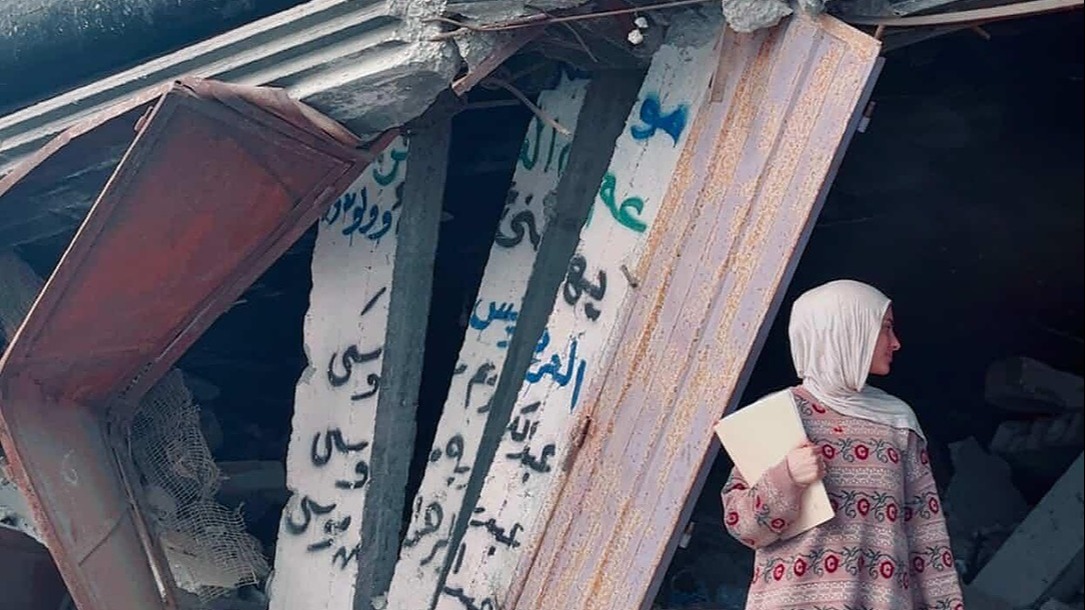
Here is her testimony
My name is Aya, and since I was a little girl, I dreamed of becoming a successful person. I always wanted to study English because I loved the language and admired the kindness and empathy many foreigners showed toward us. Their support and humanity made me want to communicate with them and understand their world, so learning English became my biggest passion.
Life in Gaza was beautiful and peaceful. Your loved ones and relatives were around you, and you felt safe among them, between the walls of your home and its garden. I was only 16 years old when the war broke out. I was very hardworking in my studies and completed 12 levels. Unfortunately, my graduation ceremony was on the same Saturday when the war started, and I was not able to take my certificate that proves my ability to speak English.
Life in Gaza used to be quiet and safe, surrounded by all our loved ones. But one day, everything changed. A war broke out. I don’t want to get into political matters, but I did not feel at ease on the 7th of October. Deep inside, I felt that something was coming, that a war might change everything.
But life was not easy. During the war, my father lost his job, and suddenly my family had no source of income. Everything became difficult, especially the dream of going to university. The tuition fees were too expensive, and for a moment, I felt hopeless and thought my dream would disappear.
We had a big and beautiful house, and we were forced to leave it without our clothes or anything, only a sleeping mattress. We had to leave on the first day because our area was dangerous.
Now we are living on the roof of a building consisting of two rooms and one bathroom. The room I am living in now is made of strong nylon, which makes it very hot in summer and very cold in winter.
However, I refused to give up. I believed that dreams are worth fighting for, no matter how hard life becomes. So, I created a fundraising campaign to help me pay my university fees and continue studying the major I have loved since childhood.
I created this link to help me pay my university fees, transportation, and book costs. It really helped me, and now I am about to finish my first year at university thanks to my friends and loved ones here.
My story is not only about hardship; it is about hope, determination, and believing that even in the darkest times, we can still hold on to our dreams and keep moving forward.
I entrust you with everything and my love, and I hope you do not leave me and that I can become a translator for news channels in the future so I can deliver the truth to you.
And indeed, on the 9th of October, the situation escalated in Rafah, where we lived in an eastern area. It became dangerous, and we were forced to leave and move to Al-Jneina neighborhood in the middle of Rafah. At that time, no one could go back to the eastern areas.
After three months, the people of the neighborhood gathered themselves and we returned to our homes. After that, on the night of 27/12, they bombed my uncle’s house, which was next to ours. That night, my cousin was martyred 💔.
Afterwards, we moved again to live in Al-Jneina. Then Rafah was evacuated, and we were displaced without taking anything because of the dangerous situation and continuous bombing. We couldn’t carry anything—we survived only with our lives.
We stayed in the central area, in Al-Zawaida, for a year. Then news came of a temporary ceasefire, and we returned to Rafah with hearts full of hope and love. We spent some of the most beautiful days of my life there.
And then, once again, we were displaced, with no return to our home.
Question and Answer
Hello Aya, and thank you for agreeing to answer these few questions so we can get to know you better.
This “interview” will be divided into 4 sections: Life in Rafah before, the turning point, the present, and a conclusion.
Life in Gaza
How would you describe life in Gaza before you were forced to leave, for people who have never been there? I finished my secondary school studies during the war with an average of 95.3, and this was my biggest achievement—reaching this grade despite the war, displacement, and famine.
What is your educational and professional background? My main focus in my studies was translation and the English language.
Do you still have any family? Are you still in touch with them? Yes, I am living with my family, and I am in constant contact with them.
The turning point
The trigger was the targeting of our relative’s house and the martyrdom of his son, as he lived in the same neighborhood. We gathered a few clothes in school bags and our bedding, and we waited in the street for hours to find a car that could take us to a safer place, while there were almost explosions every half hour.
The concrete present
How many dollar week and what does that allow you to buy? I might get fifty, maybe less per week, and there are weeks with nothing.
Do your have internet access for their studies? I have internet access, and that’s the only good thing here. Internet cards are available, and we buy a card for ten hours of internet access each time.
Is there mutual aid, and how is it organized? We receive a food parcel from the World Food Programme maybe every two months. It contains a kilogram of sugar, a kilogram of rice, four bottles of oil, and some canned good
Conclusion
If you could speak to everyone, what would you say to them? I would like to thank them all for helping me collect donations and register for my first semester. I hope they will help me finish my university studies, and I want them to know that I feel a lot of gratitude and love for them.
A voice from Gaza : Angham
Hello everyone,
Here is Angham’s introduction, she has so much to say; that’s really what came out of our conversations!
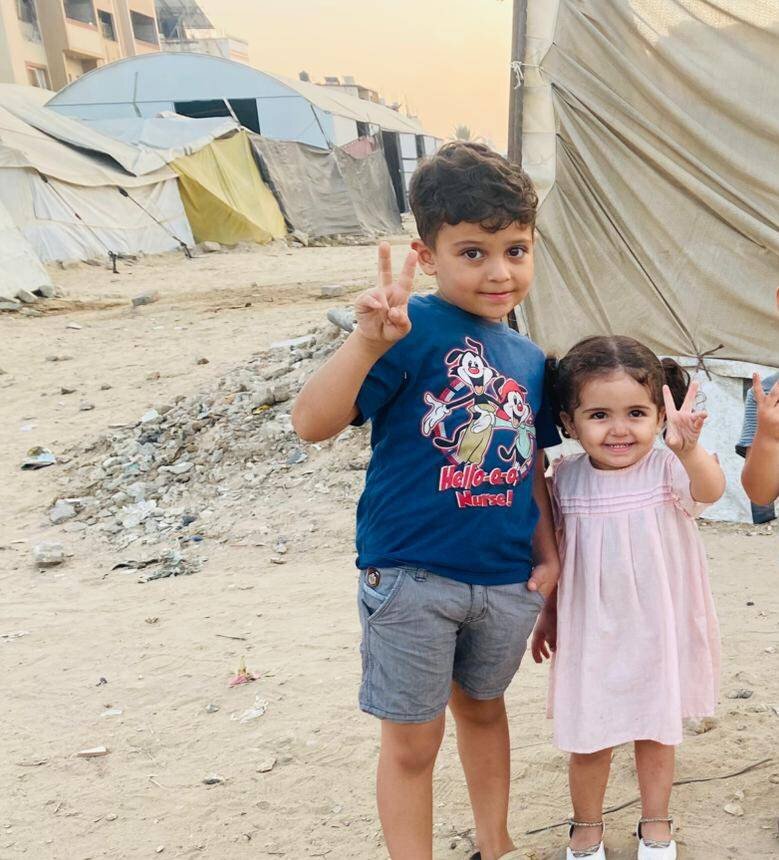
Angham lives in Gaza, and if you can, check out the link at chuffed.org:
chuffed.org/project/1… gaza-verified.org/people/@a…
You can find her on social media : Mastodon : mastodon.social/@anghamrl… Instagram : www.instagram.com/help_omar…
Before the war, she lived in Gaza, in the Shuja’iyya neighborhood.
During the displacement, she was in :
- an area called Al-Tuffah
- an area called Tel al-Hawa
- an area called Industry
- an area called Sheikh Radwan
- an area called Al-Jalaa
## Here is her testimony, just as she gave it to me:
I’m Angham I am from Gaza , a mother of two children, Omar and Ayla. I lost my home and have no shelter. I need your support via this link. I’am Angham from Gaza. I am married and have a son and a daughter.
Before the war, our life was simple, beautiful, and stable. My husband worked making Montessori beds for children, as well as gypsum and painting work, and I owned an online children’s clothing store. We had a warm home that brought us together, full of safety and peace.
My son Omar had toys he loved, and I never deprived him of anything, while my baby daughter wore beautiful clothes. When the war began, she was only six months old.
After just forty days of war, we were forced to flee from our home to my father’s house, and only two days later, half of our home was bombed. During that time, two of my husband’s brothers were killed. Shortly after, my mother’s entire family was killed : 36 people in one day.
On that same day, tanks entered our area, and we fled to a kindergarten owned by relatives, but even there we found no safety. The tanks entered again, and we were forced to flee once more.
After the army withdrew, we returned home, but the nightmare repeated itself. The tanks would enter, we would flee, then return, only to run again.
Every time we tried to settle down and I tried to continue teaching my son Omar and bring back some sense of normal life, we were forced to leave under bombing and gunfire. We lived through displacement over and over again, moving from one place to another without safety or stability.
During the famine days, my husband risked his life every day to bring us flour and food. One day, while people were trying to get food, a massacre happened. My uncle was killed in a horrific way, and my son Omar witnessed everything with his own eyes. Since that day, my child has changed deeply, and those scenes still haunt him.
We lived in Shuja’iyya, and because of the intense bombing, we were eventually forced to leave and never return. Later, our home was completely destroyed. We lost our house, our memories, and the life we had spent years building.
Today, I no longer dream of big things. All I wish for is a small, safe home to shelter me, my husband, and my children, a place where we can finally feel safe after all this fear and displacement. I dream that my son Omar can study in a good school, and that my daughter can also have a safe and normal life. My only dream is to start over again and give my children a peaceful life. After that, everything else becomes easier.
Hello Angham, Thank you for taking the time to answer a few questions
The past, life in Shuja’iyya :
How would you describe life in Gaza before you were forced to leave, for people who have never been there? Life in Gaza before the war was very beautiful. I loved my life and my beautiful, clean home. Gaza was like paradise
How old were your children when you had to leave? Did they realize what was happening around them? My my son Omar were aged 4 years old and Ayla 6 months. Omar knew everything
What is your educational and professional background? I have a diploma in law assistantship.
What was the school your children attended like? UNRWA ? Omar did not attend school; he was in KG1 when the war began. Now he goes to a school that is not affiliated with UNRWA.
What were their favorite subjects in school ? Omar prefers math, Ayla science
Do you still have any family, besides your children and your husband ? Are you still in touch with them ? Yes, I have relatives, but I lost a lot.
The turning point :
I left my home when tanks entered the area where I live. I left at the last minute
Under the bullets. And the ongoing bombardment
I went to an area where there were no tanks. When they withdrew from my area, I returned to my home.
For almost two months I was in a place with people I didn’t know, without any basic necessities of life, no electricity, no water, no food.
The famine was in northern Gaza. My weight was 50 kg and now it’s 39 kg I was breastfeeding For days I went without food
My husband used to go to the flour mills to get some for us, but he would come back empty-handed.
One day a massacre happened, and my uncle died and was beheaded. After that, we stayed in our house for a month, and the same thing happened again; tanks entered, and we went out to an area called Al-Rimal.
Without anything, there are no clothes, no hygiene products, and no basic necessities of life.
After the clouds disappeared, we returned home again, but each time the house was in ruins and more destroyed than before. This happened repeatedly, and we moved from one place to another.
Before the ceasefire, we walked and slept in the street in the middle of the night to the south. We moved from the north to the south. A region called Al-Maghazi
I didn’t receive any help from anyone, so I started the Showfid campaign.
The concrete present
How is the camp organized today? What exactly are you living in? I live in a place that isn’t mine and I was evicted from it. I can’t live in a tent; I have a phobia of birds and insects. I need someone to help me pay my rent.
How many dollar week and what does that allow you to buy basic necessities and hygiene products, as well as food? I need $300 a week to buy food, hygiene products, and supplies for my children.
What can you buy where you are? The prices here are exorbitant. My child goes to school and I need $200 every month I can’t buy a wardrobe or anything else because the place isn’t mine.
Do your children have internet access for their studies? I receive no assistance and I have no mattress or pillows. It’s all borrowed, not mine.
Is there mutual aid in the camp, and how is it organized? I don’t live in a camp; I’m living somewhere temporarily and I’m trying to go home, but I don’t have the money.
Conclusion
If you could speak to everyone, what would you say to them?
I need someone to pay the rent for me and my children and the school fees for my children. This is the most important thing
After that, I don’t want anything from the world. I just want stability and for my children to get an education.
Things that were mine before the war, I can’t afford to pay for now because I lost everything.
A voice from Gaza : Dalia
This post is apolitical: I carry voices of people, not of camps. Its sole purpose is to share the stories of those who wish to be heard.
Hello everyone,
This post will be divided into 3 parts:
- An introduction to Dalia and her family
- Dalia’s testimony
- A series of questions and answers
Introduction
I wanted to introduce you to Dalia, a young woman in her thirties, originally from Rafah, now displaced with her family to Deir al-Balah near the Egyptian border.
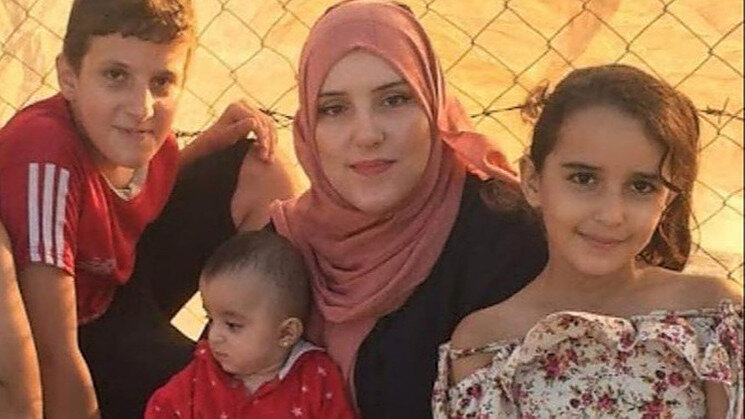
I met her on Mastodon. Dalia is real, and she is registered with the chuffed.org program: https://chuffed.org/project/172129-please-help-dalia-and-her-children-escape-this-genocide
Her profile is also verified: https://gaza-verified.org/people/@daliarezk@mastodon.social
Dalia and her children are registered with UNRWA.
(Unfortunately, their services have been halted in this region.)
You can contact her and send your messages directly on Mastodon: https://mastodon.social/@daliarezk where she keeps a day-by-day “war diary.”
I was given access to photos and videos of her former life, and I thank her deeply for the trust she has placed in me.
She worked as an artisan pastry chef in Rafah, had a beautiful house near the sea, and a mortgage… Children who were gifted at school, whose report cards show they were among the top of their class.
A life that was, all in all, ordinary, except that it was unfolding in Palestine, in the Gaza Strip.
Dalia and her family have known hunger and displacement in just a few months. The destruction of their home, of the trees she cared for as if they were her children, to build a U.S. center; her bank is now asking her to repay her loan!
But for the past two and a half years, everything has been taken from them. They have been displaced nine times. Each time, they had to flee to save their lives, abandoning everything every single time, even their dignity.
They lived for more than 2 years in a refugee camp, and today they live in a warehouse with a rent of $500.
This warehouse offers no comfort, is filled with insects, and access to water remains a major problem.
Access to food is also a serious issue: she receives $60 to $90 per week, while the cost of a single meal is around $70. She can no longer eat normally.
To escape the war and cross the Egyptian border, here are the prices:
- For each person aged over 16: $12,000
- For each person aged under 16: $7,000
For Dalia, it’s over $50,000 … A sum well beyond her reach. And as she puts it: there is very little prospect of providing for her children’s schooling.
Leaving Gaza is as difficult as staying…
Dalia is a name whose etymology is close to “branch, flower, vine.” Here is a short text dedicated to her:
“Dalia—like a vine reaching toward the light—who raised her trees as if they were her children. The war razed the farm to the ground, but not its roots.”
Here is her testimony, just as she gave it to me:
I am a mother of four children: Kanzi, Yousef, Ahmad, and little Kinda (aka Canada).
We once led a simple and peaceful life in our home. My children went to school and did well, full of dreams for their future.
I made sweets for them with love, and our home was filled with warmth and safety.
But for the past two and a half years, everything has been taken from us. We have been displaced nine times. Nine times we have been forced to flee to save our lives, leaving everything behind.
The most terrifying moments were those when we had to flee in haste, as the tanks closed in and bombs fell around us.
We ran long distances under fire, carrying our children, with nothing but fear in our hearts.
My children Kanzi, Yousef, and Ahmad lost their schooling. They were excellent students, but their dreams have been put on hold — not by choice, but because the war stole their right to learn. My youngest daughter, Kinda, is only 5 years old.
We led a dignified life… Our home was full of warmth and laughter, and our days were shaped by pleasant tasks and hard work.
We made sweets with love, and every creation that came from our hands filled us with joy; our efforts were reflected in the joy that lit up people’s faces.
These images don’t speak only of food… They tell of the life we once led, and of the dreams that grew with us day after day.
Today, everything has changed… but we still carry within us the same spirit, and the same hope of living once again in dignity.
Before the war: Canada’s birthday was filled with laughter and colors, with balloons everywhere, cakes, songs, and genuine laughter.
We were celebrating her childhood… her innocence… her dream growing along with her. After the war: Canada’s birthday became quieter… more painful… We celebrate not only because she has turned a year older… but because she has survived a year.
We try to steal a moment of joy in the midst of exhaustion and fear, a few balloons… but her heart is still full of life.
It wasn’t just about dough, it was a struggle for survival.
We paid exorbitant prices for flour to feed our children, and on nights when money was scarce, we endured hunger with the patience of Job.
Our hands grew weary and famine weakened our bodies, but we never lost our humanity in the midst of our suffering.
Between what we once were and what we are now lies the story of a war that left nothing of who we were. We aged years in just a few months, and we endured the bitterness of a hunger that consumed our souls before our bodies.
The loaves of bread we kneaded each day with our tears and our toil bore witness that we did not give in, despite the exorbitant price paid for every grain of flour we sought.
This was our first displacement, amid torn canvas and corrugated metal sheets. Patient souls live there, asking nothing of the world but safety and the sound of rain when it does us no harm.
“It is not just a tent; it is walls of patience and a roof of prayer.” “Despite the worn canvas, our dreams remain intact.”
For the third time, we are carrying what is left of our lives in small bags, heading toward the unknown.
We are not just numbers in reports; we are stories of homes that have been closed, dreams postponed, and hearts weary of departures.
This third displacement… as painful as the first, but more crushing in its exhaustion.
Repeated displacements do not make us used to it; they wear our souls down even further.
Each time we are displaced, we leave behind something that can never be recovered; And this third time, all that remains of us are exhausted bodies and eyes that ask: “How much longer?”
The fourth displacement… The number alone is enough to make any word futile, so what about the reality? For a life to go from a “home” to a “tent,” then to a “warehouse,” means that one’s soul has become the only cargo one is trying to protect from destruction.
Here are a few words that express the cruelty of this transformation, from “home” to “warehouse”:
Here, our laughter was sincere, and our hearts were at peace… when safety was the air we breathed. Our faces told stories of tranquility before the days wore us out and circumstances changed us.
In this photo, I do not just see faces; I see a warm homeland to which we returned every evening.
I have many photos and videos that bear witness to my suffering, but I am worried and desperate, and I do not know how to put my thoughts in order.
– Dalia REZK
Question and Answer
Hello Dalia, and thank you for agreeing to answer these few questions so we can get to know you better.
This “interview” will be divided into 4 sections: Life in Rafah before, the turning point, the present, and a conclusion.
Life in Rafah:
How old are you today? I am 39 years old today. My children were 14, 12, 10, and 3 years old when we left Rafah.
How old were your children when you had to leave? Did they realize what was happening around them? Yes, the older ones were aware of what was going on, but they were afraid of the sound of the rockets. In the tents, they caught diseases, including hepatitis.
They also suffered from poor mental health due to their life before and after the displacement, but also from the close quarters of families living right next to each other and the lack of safety and privacy. We all slept in the same room out of fear of the bombings, and so that, if we had to die, we would die together. After six months, we were given two days to leave the city. We went to the coast of Khan Yunis and lived in metal-sheet shelters for nine months.
What is your educational and professional background? How did you learn English so well? I completed undergraduate studies in geography and geology, then a master’s program. As for English, it is part of the school curriculum from the first year of primary school, and I also learned it through the Internet.
What was the school your children attended like? My childrens attended UNRWA schools because they were bright and ambitious, and were among the top students; they were elected to the student council every year.
What were their favorite subjects in school ? They excel in most subjects, but especially in scientific subjects such as mathematics, physics, and chemistry.
Do you still have any family, besides your children? Are you still in touch with them Yes, my father, mother, and sister were displaced with us to Deir al-Balah
Five brothers and their families are present on the beach in Khan Yunis.
The turning point
When did you realize you had to leave? What was the trigger? We left Rafah after six months since the start of the war. Rafah was crowded with displaced people from all over the Gaza Strip. We took some of our belongings and went to the western part of Rafah, to the coastal area of Al-Mawasi by the sea.
We stayed there for three difficult weeks. We tried to manage life in very basic ways, building tents from fabric. The bathroom was just a hole in the ground with no roof or cover at all.
In the third week, we received a warning to leave the area and move to Khan Younis. We left quickly because of the massacres happening around us. We waited for a car to transport us, and the driver asked for one thousand dollars for the ride, so we agreed out of necessity.
We were taken to an area in Al-Mawasi, Khan Younis, called Asdaa. It was like a desert. We built tents from zinc sheets and fabric, and we stayed there for four months.
On a Friday, leaflets were dropped from planes ordering a complete evacuation of the area. We did not respond because we had no strength left to move again, and we did not know where to go. Suddenly, there was an attack by tanks. We fled, carrying only fear and exhaustion, and we managed to survive without taking anything with us.
We left in a car to an area near the European Hospital, which was classified as a red zone. We stayed in a relative’s house for five months.
How did your departure from Rafah unfold? What were you able to take with you? Our relatives gave us blankets, clothes, and kitchen utensils to help us manage. Five months later, a truce was declared—the first truce we had. During it, we returned to Rafah. It had become a ghost town, and the destruction was terrifying. Our house was partially destroyed, but we were overjoyed that it was still standing. We returned to our memories, our home, and my comfortable bed. I spent an entire month cleaning the house.
We stayed for two months, then the truce was broken. The army ordered us to evacuate. Where could we go? They did not give us time. We waited for a car to take us to the Khan Younis crossing, but we could not find one. We left on foot and stayed in an area called Qizan Rashwan for four days, sleeping on the street. The area was under heavy and terrifying bombardment.
We then decided to go to Deir al-Balah and rented a small warehouse that was not suitable for living, but we had no choice but to stay there. We pay $500 a month for a place that is not even fit for a chicken farm.
In a few days, it will be a full year since we left Rafah, which has been completely destroyed, along with our memories and dreams.
Under what conditions did this departure take place? I will try to provide you with a picture of the house when we returned after a nine-month absence. I had planted a tree called Flora, which grew abnormally during our absence, covering our house and our neighbors' houses, and reaching the third floor. That was remarkable.
Two years ago today, the occupation began evacuating and bombing the city of Rafah. On this day, we were forced out of the city. What a strange coincidence! Glory be to God!
I forgot to mention the famines we experienced more than once, which occurred intermittently.
We couldn’t find a loaf of bread to eat. My children were crying from hunger, and my eldest son would go chasing after trucks to bring us a kilo of flour, putting himself in danger. We didn’t know if he would return. We would chase after the planes that dropped food, but we wouldn’t get anything.
Did you receive any help? As for the aid organizations, no one has recognized us yet, even after a year of appealing for a tent, but no one has responded.
The concrete present
How is the camp organized today? What exactly are you living in?
The situation is beyond description and imagination, whether in the camps or in the remaining half-destroyed or partially destroyed houses. We suffer from a severe water shortage. My sons, Youssef and Ahmed, bring salty water from a distant source; it’s unusable and leaves white stains on our clothes. But we have no other choice. Food is also extremely difficult to obtain due to its high price. After the famine we faced, food has gradually started to arrive, but prices remain low. The children here cry from hunger, eating lentils repeatedly. My daughter, Kinda, brings food from the World Kitchen charity because her brothers refuse to go, feeling humiliated and degraded. I will attach a picture of Kinda bringing food. We also face immense difficulty in educating the children. Schools have been closed for years, and those students who continue their education have to pay a considerable sum for private tutors. My children don’t attend school because of the high cost. As I mentioned, we pay $500 in rent for the storage room we live in, and next month we won’t be able to because the bank is demanding payment of the installments.
You receive less than $100 per week for the five of you; what does that allow you to buy?
$100 is not enough for a meal for a family of six. Unfortunately, we get our food from the international kitchen, and we are grateful for its work; without it, people would starve. More than a million people order food from the international kitchen.
What are the prices for basic necessities and hygiene products, as well as food?
Hygiene products are expensive. They were banned from entering the country. My family and I used salt to brush our teeth. Only the financially well-off can afford hygiene products and food, and they are few. People live in tents in tragic conditions, plagued by mosquitoes and fleas. The biggest problem is the rodents that infest all of Gaza and spoil the food and flour. Our days are similar. We wake up in the morning, and my children go to fetch water. Every day they bring back 500 liters of water for washing, cleaning, and bathing. Kinda goes to the soup kitchen, but lately she comes back empty because of the overcrowding. The aid that families receive is very little and limited due to the reduction in aid deliveries.
This means that every three or four months each family receives a parcel containing rice, lentils, canned beans, oil, and tuna, which is not enough food for them for a week. Also, cleaning supplies are limited to families with children, and most of them consist of Pampers packs due to their high price and the inability of parents to buy them.
What can you buy where you are?
The donations I received through the link helped me buy clothes for my children and some essential household items, but donations have become very scarce, and I am convinced that donors are not obligated to donate because the solution lies in finding a comprehensive solution to our problems.
Do your children have internet access for their studies? The internet connection for Denel is weak, intermittent, and frequently down.
Is there mutual aid in the camp, and how is it organized?
Yes, families have become more cooperative after the war; they also work collectively to help each other. When we lived in tents, our neighbor used to bake bread for us for free. I also had a solar panel; I used to charge my neighbors' phones daily. And we also exchange clothes. If I have extra clothes, I give them to my neighbor, or if my children’s clothes aren’t suitable, I give them to my neighbor’s children. They were used clothes and they were happy with them.
How are your daily lives organized in the camp?
Yes, as a mother, I wake up early, knead the dough, then go and bake it at someone’s old clay oven. Afterwards, I return and prepare breakfast. By this time, my children have already fetched water. I do the washing, then the dishes, then the cleaning. After that, I go to my parents' house, who live nearby, to check on them and take care of my mother, who suffers from chronic high blood pressure and is also blind. She is a victim of the war.
Conclusion:
What would you like people to know more about you and your family?
We’ve lost everything we’ve accomplished over the years. Even my brightest children are forced to work around the house carrying water instead of studying. Our lives are at a standstill, and we still hope the world will look upon us with compassion and humanity. We long to return to our pre-war lives; they were simple and we were content. I hope you appreciate the blessings you have. My daughter used to fall asleep crying, wanting a biscuit or a piece of dry bread. Don’t strive to ignite wars, even if you are the strongest. Extend your hands only in peace, and know that happiness lies in giving and seeing those in need smile.
If you could say one single thing to the people in France who will read your story, what would it be?
I say to the French people and to the whole world, I hope that no one, no matter what, ever has to experience the difficult and painful days we have lived through. I thank God that I did not lose any of my family members or any part of their bodies because of this war. There are tragic stories that, if revealed, would shame the world at the enormity of the calamities that have befallen us. I want to tell them that war is horrific, truly horrific. We extend our hands in peace, and nothing but peace and security for all.